
What is regenerative agriculture?
The goal of regenerative agriculture is to develop growing systems that mimic the natural ecological processes around us as closely as possible.
At the Island Grown Farm, we break down our practices into five key principles. Though we talk about them individually, all of these principles weave together.
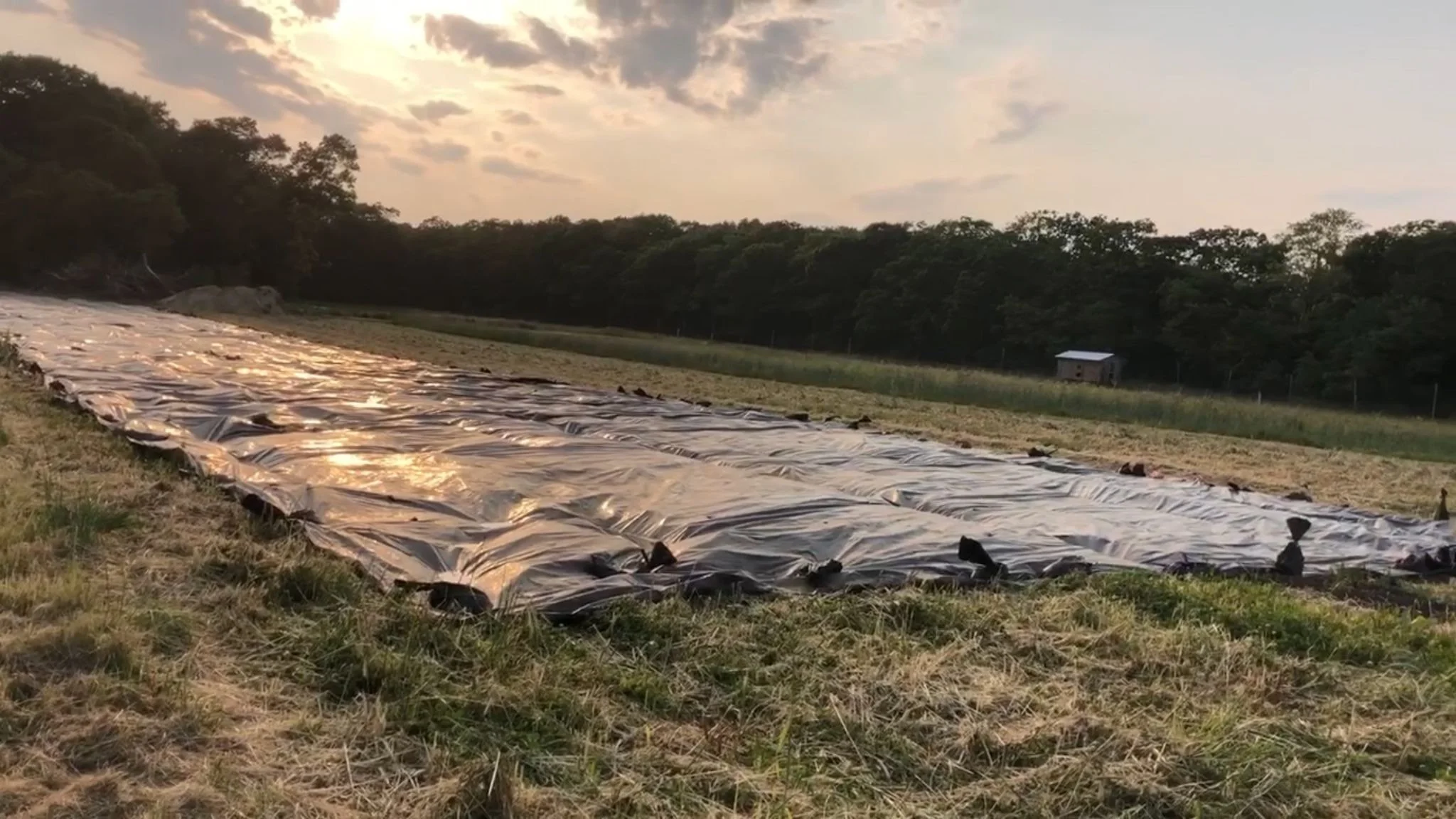
Reduced Tillage
Tilling or “turning over” soil is an efficient and effective way to eliminate weeds or crop residue, loosen soil, or prepare soil for seeding or transplanting. However, every time soil is tilled, important microbial communities that make up healthy soil are torn apart, oxidated, and usually die off. Over time, repeated soil disturbance will deplete soil of its nutrients and biology, which will make it less resilient to environmental changes and require farmers to import more and more inputs (like fertilizer, minerals, and other amendments) to ensure a harvest. To build or maintain nutrient-dense, living soil, it’s important for farmers to minimize soil disturbance.
No-Till and Reduced-Till farming can look different farm by farm and region by region. At the Island Grown Farm, our bed preparation for the majority of our crops generally follows a three step process. First, a field of pasture or cover crops is either rolled or mowed down. Second, we use a reduced tillage implement referred to as zone or strip-tiller to open a narrow band of soil where a seed or transplant will get planted and the rest of the bed is left undisturbed. Next, the field will get covered in tarps to flush and kill off weeds or unwanted plants four to six weeks before planting. When the tarps are pulled off, we typically have a clean growing bed and planting zones accomplished with minimal soil disturbance.
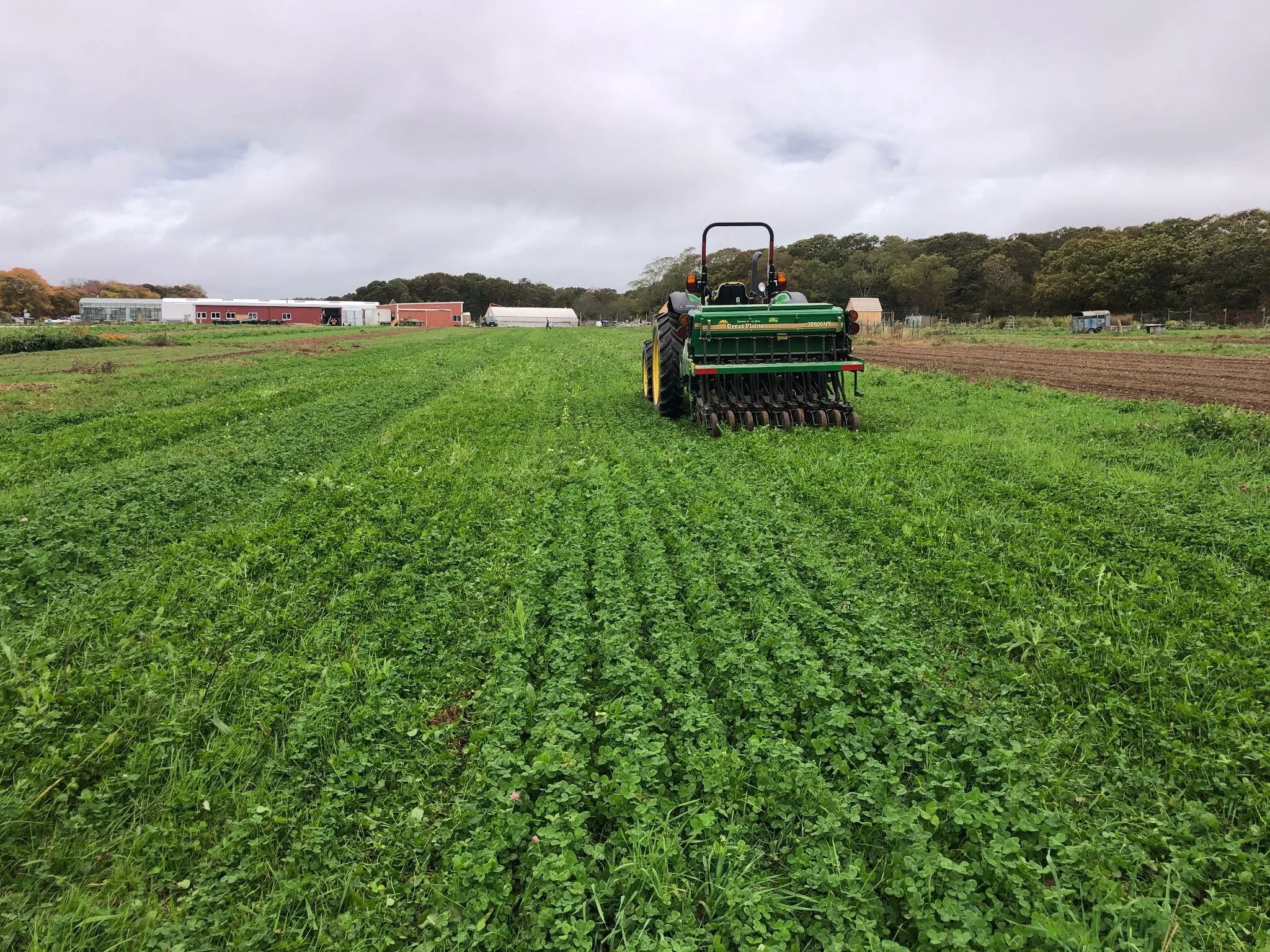
Living Mulches
Part of supporting a thriving soil ecology is maintaining living roots in the soil at all times. Roots host microbial life, sequester carbon deeper into the soil profile, provide important airways for soil life, prevent erosion during heavy rain, among many other vital roles. Instead of relying solely on a short season cash crop to provide root structure to a system, farmers can use cover crops to maintain and protect their soil in between growing seasons.
Cover crops are usually diverse crop plantings (likely mixes of grass and legume species) that will grow in a field to provide structure and nutrients underneath the ground, then get rolled or mowed down to provide a thick mat of mulch on top of the soil before the cash crop is planted. Using cover crops as a mulch helps alleviate the need for plastic mulch products to control weeds during the season, and has the added benefit of feeding the top soil layers as the plant material decomposes over time (think leaf litter in a forest - fallen leaves help shade out any plants from growing too close to the trunk of a tree, and decomposes to return its nutrients to the soil over time).
At our farm, we employ the typical cover cropping methods as often as possible. For the last four seasons, we have also tested living clover mulches on some of our crops alongside Momentum Ag. At the start of a season, we will seed a thick mat of Dutch White Clover, a nitrogen-fixing and laterally growing legume, on a growing field. Once it is established, we will use our zone-tiller to open a planting zone for our crops, and keep the clover mowed throughout the season. With this method, we can maintain the living mulch across multiple seasons, which provides all the benefits of mulch and keeping living roots in the soil while minimizing seed and labor needs.
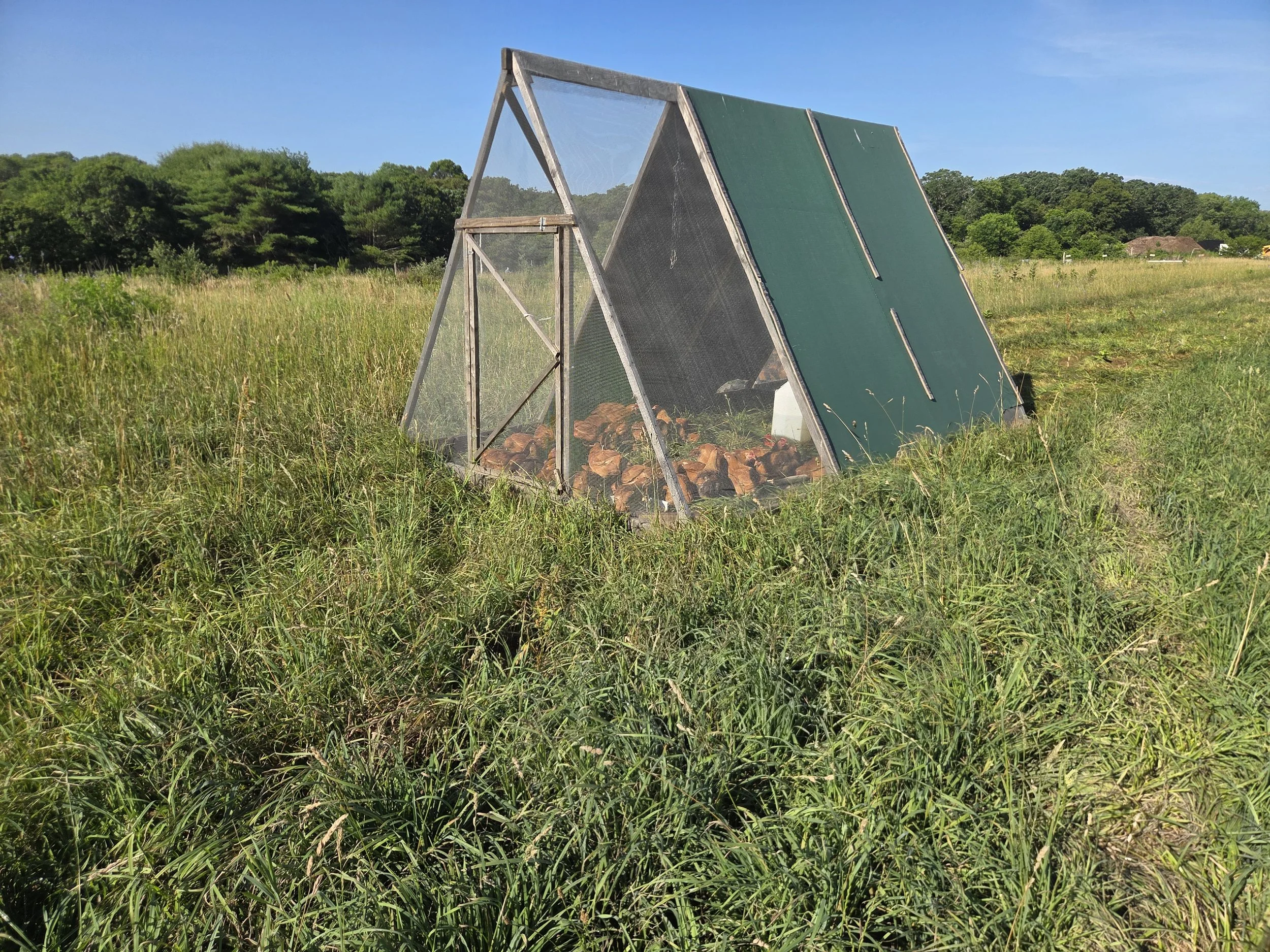
Animals
Animals play a major role in natural soil building, and the soil on farms is no different. Grazing animals can quickly convert plant matter into nutrient and biology rich fertilizer through their manure, which provides a quick boon to building soil health.
The Island Grown Farm has utilized animals in the fields for most of the last six seasons. Sheep and laying hens rotationally grazed growing fields during a two year rest period as part of our larger five-year crop rotation. Sheep helped mow down pastures and understories of grain plantings, driving plant roots deeper in the soil, stimulating new plant growth, and controlling weed seeds, and chickens followed to break up the sheep manure into smaller and more easily broken down bits while contributing nitrogen-rich fertilizer of their own. As our soil continues to improve and more of our acreage is brought into cash-crop production, we’ve switched to only raising pastured meat chickens. These chickens are easy to rotate through smaller acreage, provide tightly controlled manure where we need it most, and provide us with a high quality meat product.
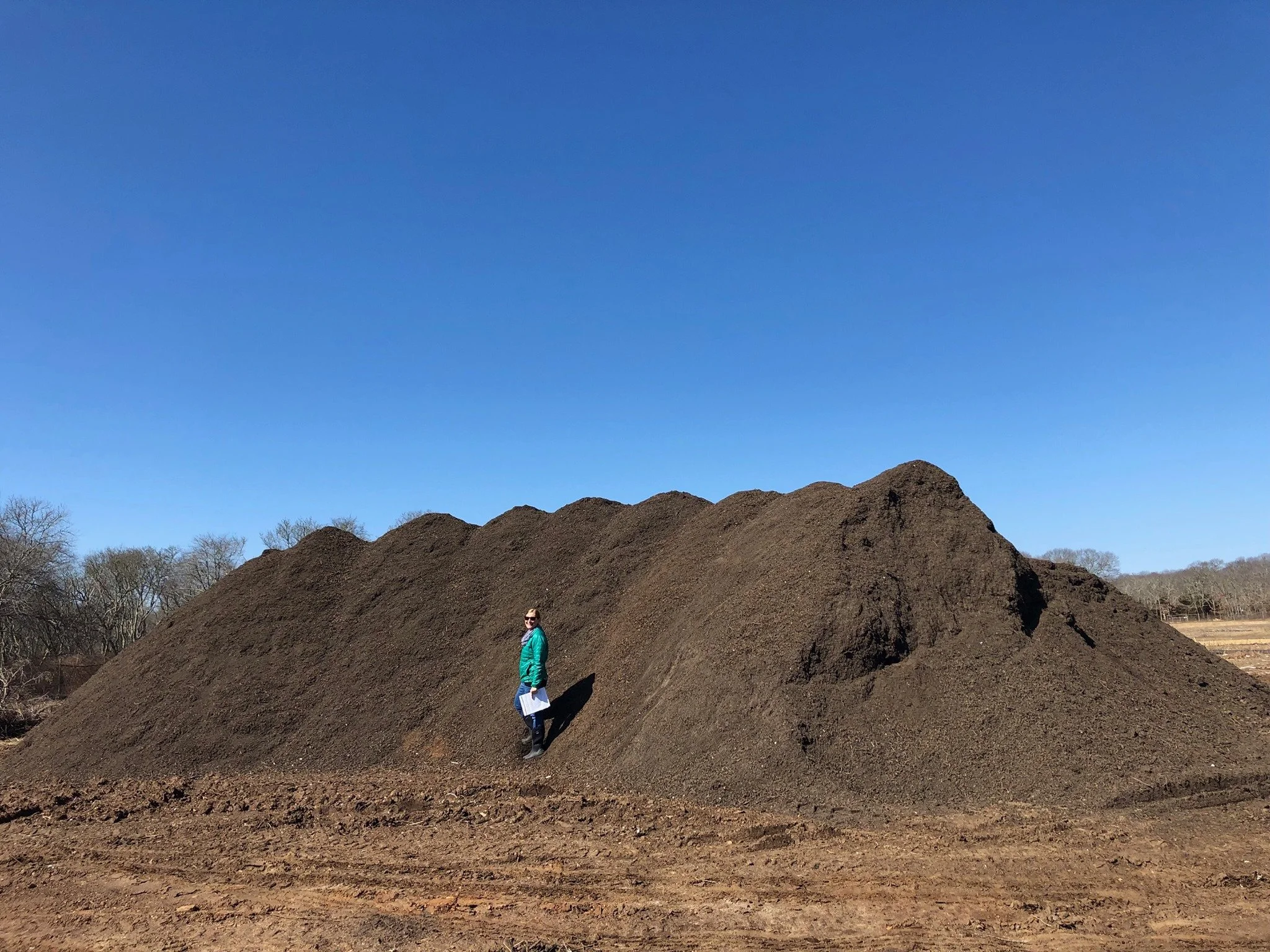
Organic Inputs
Crop growing, especially for annual crops like most vegetables, is ultimately an extractive exercise. The plant takes nutrients from the soil, grows, and then is harvested and eaten by us, which removes those nutrients from the system. Even with reduced tillage, cover cropping, and animal grazing, sometimes an extra boost is needed to keep the soil fed and crops healthy.
At our farm, we rely on farm-created compost to keep our soil ecology humming. We mix food scraps, crop residue from the field, coffee grounds, and local woodchips and leaves and turn it into nutrient and biology-packed compost through a managed, year-long process. Lightly applying compost to our fields provides a boost to the plants growing there, and inoculates the soil with beneficial soil-building microbes.
Aside from compost, we also make use of leaf mold (composted leaves), and an organic chicken manure based fertilizer when crop demands are high.
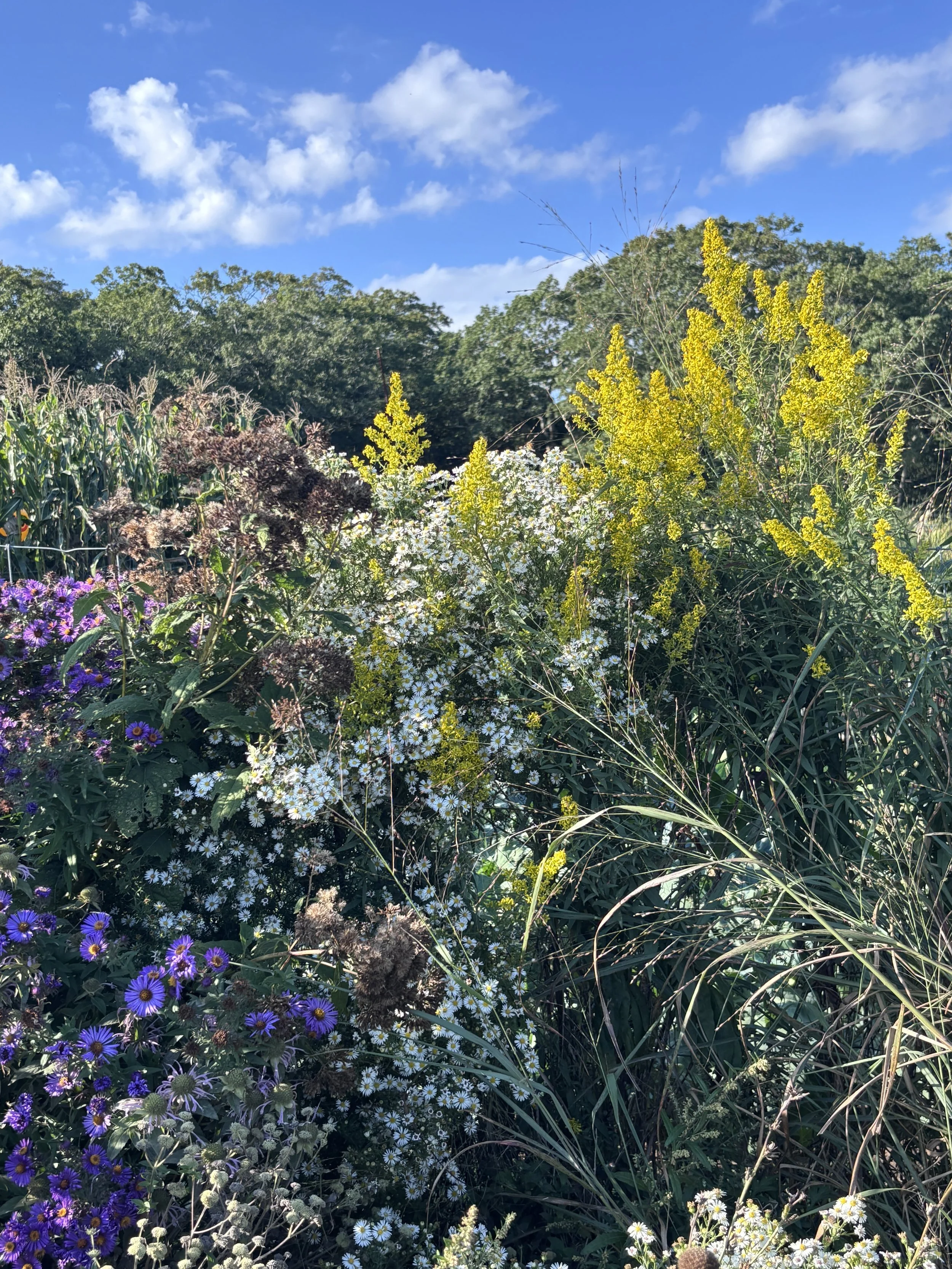
Maximize Diversity
With 40% of the Earth’s land devoted to agriculture, finding ways to support the diversity of life on farms while still producing food for a growing population is of critical importance. Single crop systems with minimal natural barriers surrounding them can lead to rampant pest issues (and overuse of insecticides), spreading of noxious weeds (and overuse of herbicides), along with other maladies not typically seen in diverse, natural systems.
At our farm, we focus on making room in our working farmscape for meadows and hedgerows full of native plants that support pollinator species, especially in areas unsuited for crop production, like shady areas, roadsides, and wet areas. The hedgerows provide important habitat and forage for native insect and bird species that are vital to our island’s larger ecosystem. Providing habitat for native species encourages predation on pest insects (reducing use of organic insecticides) and we are already seeing remarkable impacts on the numbers and diversity of insect species within just a few years of integrating hedgerows and pollinator strips. If every farm integrated native plants into spots like these, farm landscapes could make a meaningful difference in restoring and protecting biodiversity on our planet.