
Research, Innovations and Collaborations
As a nonprofit farm, we have the opportunity to innovate in ways that would be risky for commercial farms. Each season we strive to learn new methods, develop new tools that strengthen soil health, biodiversity, and productivity, and make the adoption of regenerative farming practices more practical and accessible to other farms in our region and beyond.
-
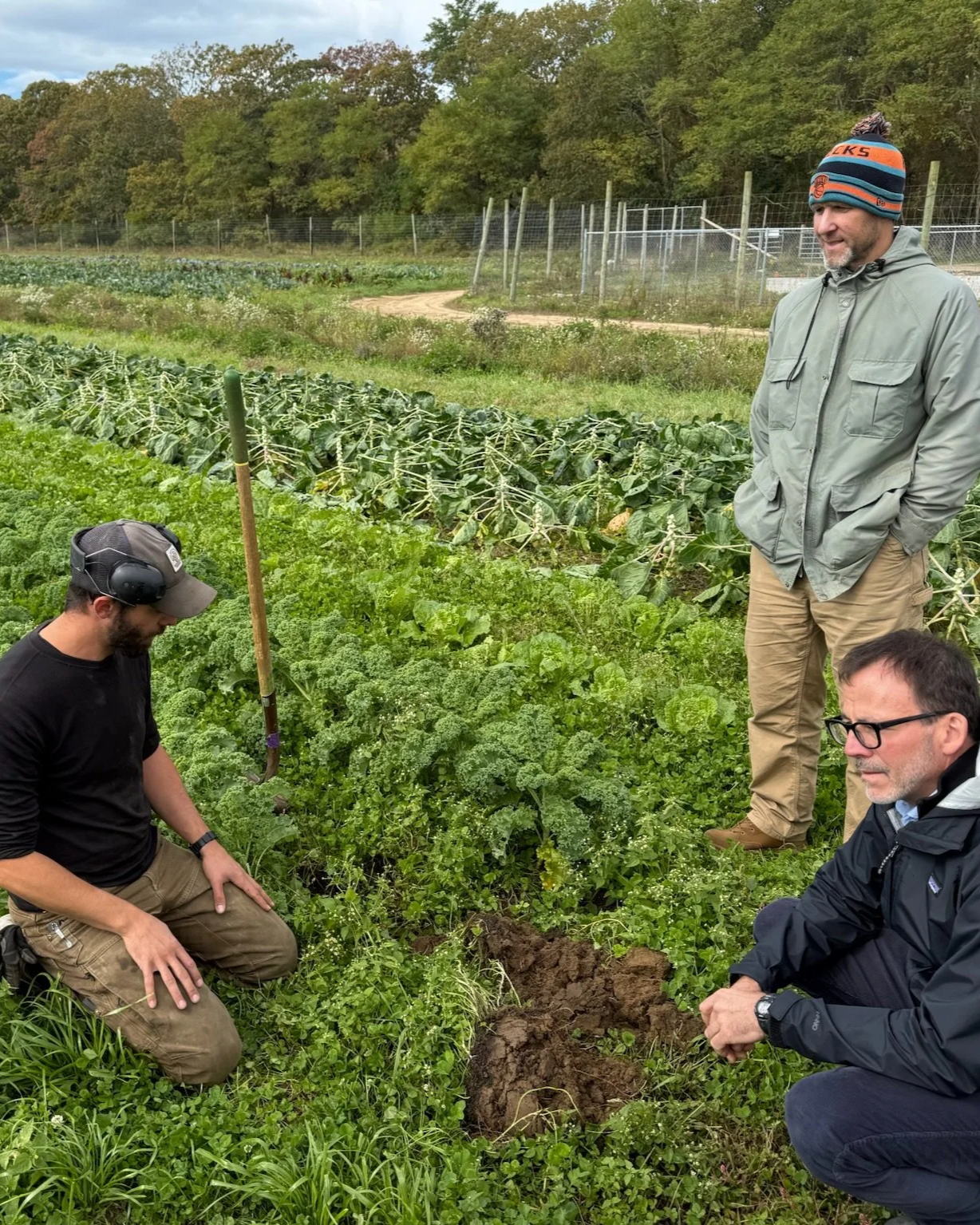
American Farmland Trust Farmer Led Innovations: IGI designed and built an innovative strip tiller for planting crops directly into mulch and shared field trial results with regional farmers in a reduced tillage cohort. Several farms have replicated the strip tiller design and for use on their own farms.
IGI is now partnering with AFT to study the soil health impact of Biochar plus Clover Living Mulch (CLM) as part of a 3-year NRCS Adaptive Management study comparing four approaches side by side: no treatment, biochar alone, clover mulch alone, and the two combined.
-
Momentum Ag Healthy Soils Challenge Grant: IGI was one of 10 New England farms testing the Clover Living Mulch (CLM) planting system in field trials shared with the farmer cohort.
-
University of New Hampshire ADAPT Agroforestry study: field trials in the IGI orchard generating research-based recommendations to address challenges and opportunities for Food Forest design and adoption in New England.
-
We are embarking on a 3-year Adaptive Managementtrial comparing crops grown in Clover Living Mulch (CLM) plus biochar vs. conventional tillage to measure soil health, moisture retention, compaction, yield, and economic impacts.
-
A three-year pilot project developed by the Betsy and Jesse Fink Family Foundation, Martha’s Vineyard Pollinator Pathways brought together the scientific expertise of BiodiversityWorks and pollinator Ecologist Molly Jacobson of SUNY’s College of Environmental Science and Forestry with the commitment of eight Island farms, including Island Grown Farm, to regenerative farming practices. The project assessed the roles farms play in supporting pollinators – and developed actionable recommendations for how farms could do even more to support insect populations.
-
A comprehensive guide for identifying, creating and maintaining functionally diverse habitat on farmscapes across Martha's Vineyard, to support native bee, butterfly and moth species at the greatest risk of local extinction. A year-long collaboration between IGI and Landscape Interactions, this Toolkit endeavors to make pollinator habitat creation easy and beneficial to the function of the whole farm system — inspiring landowners and land managers to view their properties as integral parts of a network of ecosystems that stretches into surrounding communities and across the wider region.
This work was made possible with support from The Betsy and Jesse Fink Family Foundation.
-